Friday, October 31, 2014

Interesting and weird creatures

Hi Sea Fans!

On my travels I get to see so many beautiful and amazing sea creatures. Two of the more unusual fish that I'd like to tell you about are the Lancer Dragonet and the Longlure Frogfish.
Lancer dragonet (Photo: JE Randall)
The Dragonet is very well camouflaged, as you can see in the picture, but the male is actually quite pretty (see http://thelivingsea.com/underwater/photos/0803201908410043/Lancer-Dragonet-Mating-Dance-(Paradiplogrammus-bairdi).html for a better picture) .- he uses his fins to attract females as well as keep other males away.  The prettier Mandarinfish (also a dragonet) is a very well-known aquarium fish because of its beautiful colours.
Mandarin fish(Photo: Luc Viatour / www.Lucnix.be)
One of the first dragonets I saw, other than the Mandarin fish, was in South Africa.  We weren't quite sure what it was at first, but when we pulled out the handy Fish ID book, we soon found out that we had found an amazing creature.  We didn't keep it though, we returned it back to where it came from in the sea because we didn't know what to feed it and how best to house it at the time.  That's one of the worst things you can do: get an animal and THEN think about the food and housing requirements.  It's the same when you get a pet, you can't just go and buy a dog without thinking about where it's going to sleep, what kind of food it will need and how much the food, vet bills and other extras will cost.  An animal needs to be taken care of properly and that is why you need to find out more about your animal before you decide to keep it.  Please keep that in mind the next time you go pet shopping, Sea Fans!
Commerson's frogfish.
The Frogfish is even more weird looking!  Very cute though, in an ugly sort of way.  It can also camouflage itself very well...on sponges.  This little guy has an interesting appendage - have a look at the picture below and you'll see the thing poking out of his head.  This is what is used to lure little fish closer so that they can be eaten.  It's like a fishing rod with a piece of bait at the end, but the piece at the end is actually attached to the frogfish.  The little fish doesn't know what's hit it when the frogfish strikes!
Longlure frogfish (www.fishdb.co.uk)
So that's my 2 cents worth for this week Sea Fans.  I hope you have a great week.  Drop me a comment on this blog if you'd like to know anything or just to say hi.

Bye!
Abby
}( *)8


Wednesday, October 29, 2014

Crayfish or isopod?

Hi Sea Fans!

I had the opportunity to walk around the rock pools a while ago with some kids.  What fun!  When last did you go searching the rock pools for interesting little creatures?  I haven't been in a while because I've been so busy, but the memories of that visit made me want to make more of an effort to get out there.  We found all sorts of things: starfish/sea stars, anemones, mussel shells, crab moults (the outer skeleton that the crab sheds and then it develops a new outer skeleton by hardening the soft layer underneath), barnacles and even an octopus - what a treat! 

One thing that had us confused was something that looked like a baby crayfish.  The kids got so excited.  At closer inspection, we found that it was in fact an isopod.  Isopods are also crustaceans like the crab, crayfish and shrimp, and are found in virtually all marine habitats from the intertidal to the deepest oceans.  The tail-fan of the isopod is what made us think the little creature was a baby crayfish.  (Have a look at the tail-fan of the giant marine isopod below.)
Giant marine isopod that is often displayed in aquariums. (Photo: http://opencage.info/pics/)
Over 270 species occur in southern Africa.  Now isn't that amazing.  Some marine biologists study animals just to be able to classify them so that we can know which animal is which.  Sometimes there is only a very small difference between two animals, but then they are put into different categories (family, phylum, sub-phylum etc).  Fascinating stuff!

For those of you who would like to treat yourselves and see even more animals at the rock pools, find out when the next New Moon or Full Moon is.  Spring tides, which are extra high high tides and extra low low tides, occur shortly after the New Moon and Full Moon.  This is when you can see even more animals because more of the rocks will be exposed at the low tide.  Check out the following link for a cartoon explanation of spring and neap tides:


In other words, when the sun, earth and moon all line up, all the water bodies on earth (including lakes) are pulled away from the earth so that they bulge more than normal, causing the higher high tides and lower low tides that we call Spring Tides or Springs.

Enjoy discovering your rock pools Sea Fans and chat to you soon.
Bye!
Abby

}(  *)8

Monday, October 20, 2014

Ocean Camp

Hi Sea Fans!

Just a quick one today...I was at Ocean Camp in Gulf Shores Alabama!

It was such a quick visit, but I got there at an important time: There was an art show where kids entered t-shirt entries in art design with a dolphin, the Ocean Camp mascot and frequent visitors to Gulf waters.   
Me with Caroline - the 2nd place winner.
The winning entries!
A very cool idea!  Thanks for having me Ocean Camp and Belinda.

Have a great week Sea Fans!
Cheers
Abby
}( *)8

Friday, September 26, 2014

Whalenet update - resources available and FACEBOOK!

Hi Sea Fans!  

I thought I should just quickly share this with you seeing as I visited Michael a while ago whilst on my world travel adventure:  

"WhaleNet now has a Facebook page.

Join us and access educational resources using actual satellite tracking research data.

Facebook:  https://www.facebook.com/WhaleNetatWheelockCollege

Webpage: http://whale.wheelock.edu/Welcome.html

Build a Life-sized Whale: http://whale.wheelock.edu/whalenet-stuff/LucyPage.html

Satellite tracking Data: http://whale.wheelock.edu/whalenet-stuff/stop_cover.html

We will have a live satellite tag on a marine animal soon.  Stop in Often.

Michael Williamson
Director-WhaleNet"

Go and have a look.
Have a great weekend Sea Fans!

Cheers
Abby
}( *)8

Wednesday, September 17, 2014

MAINE

Hi Sea Fans!

Now if you thought I was having fun before, just wait, there's more...with Mr and Mrs Fish (www.mrandmrsfish.com)!  Yup, that's what they are called at Fish Camp on the campus of Southern Maine Community College in South Portland, Maine.

The Fish campers and I got on really well and HAD A BALL using costumes to show life as it is in the sea! I taught about clams, tide pool life and fish characteristics and the kids became the lessons.  Sounds odd? Well, have a look...


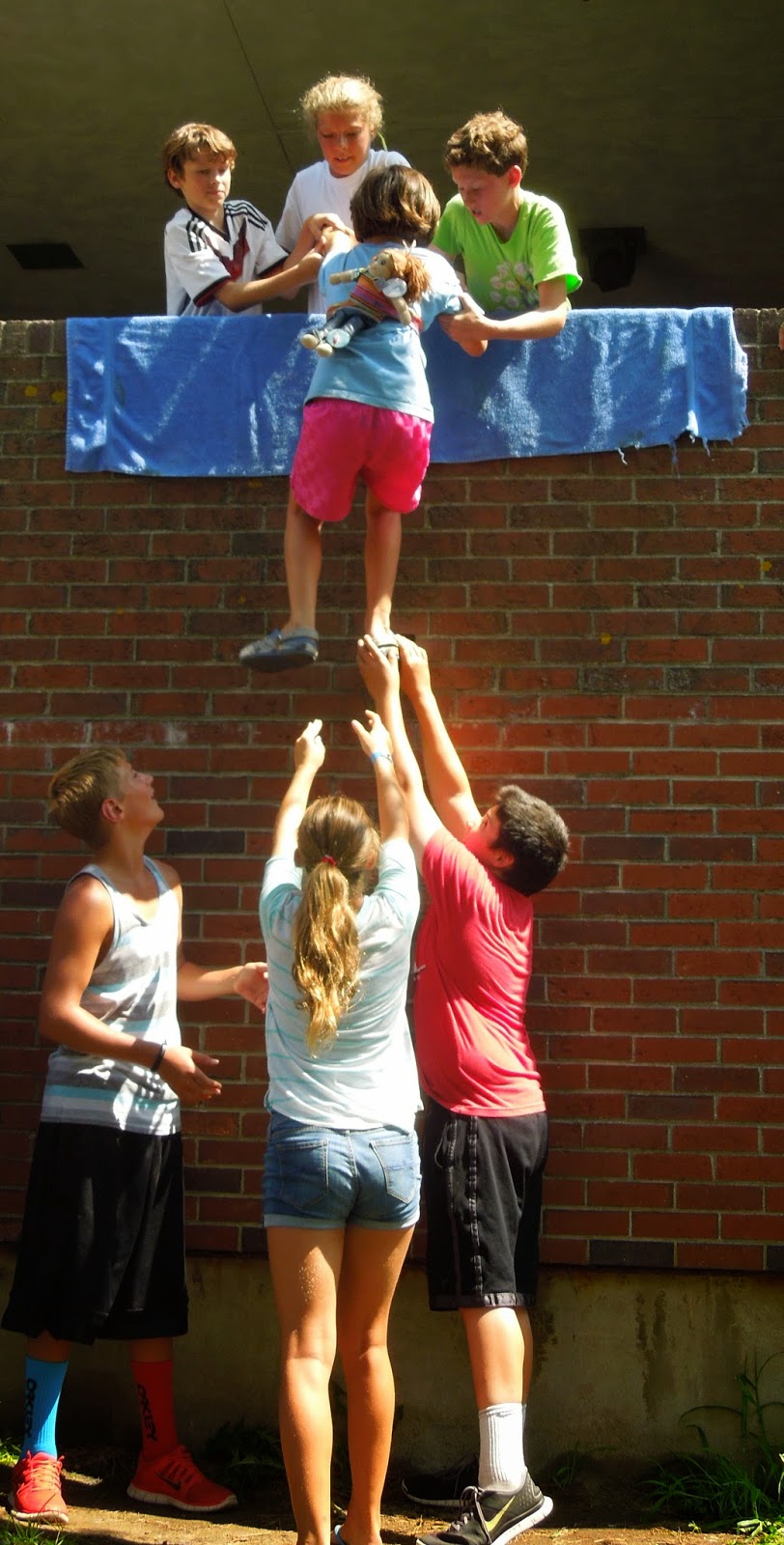
Outside of the classroom, I joined in the “Tests of Strength, Courage and Wisdom”  climbing the wall,


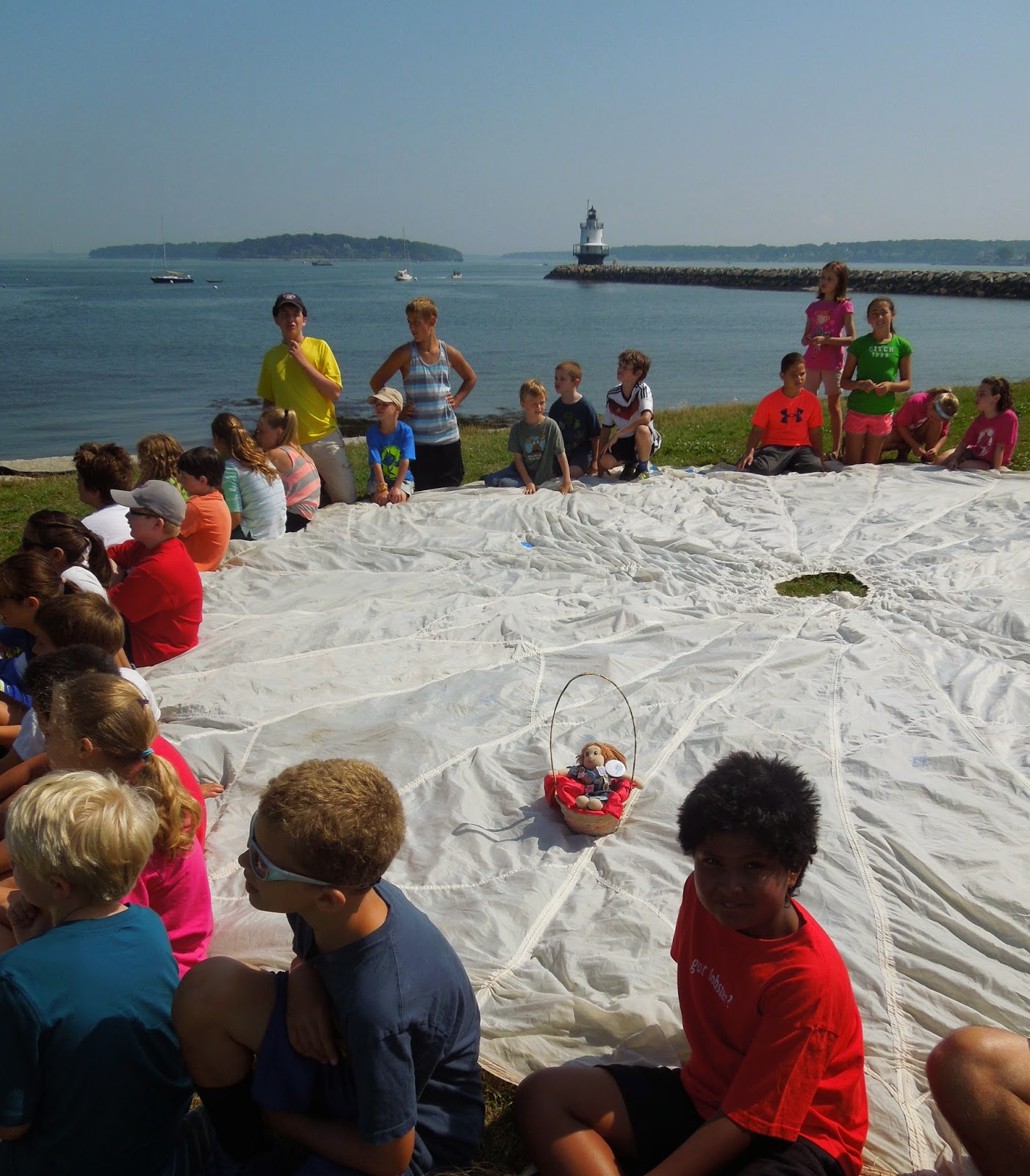
using a parachute to become a jellyfish,
and joking with the Fish Campers as they prepared for exciting challenge activities.

Come rain or shine, nothing stopped us having fun!  When it rained, I became the caller for a tropical ocean bingo style game called Mango.  
AND...I'm proud to say, I was one of the judges for the crazy hat and t-shirt contest. 

The campers thought I was a bit mad when I made friends with “Big Orange” the Fish Camp mascot and demonstrated how a cleaner wrasse contributes to dental hygiene in other fish. 

 An guess what?!  I was voted “Honorary Staff” of Fish Camp!!! 
The staff and my friends at Fish Camp.
So that was my awesome visit with Mr and Mrs Fish.  I hope I get to see them again.

Best Fishes Sea Fans!
Cheers
Abby
}( *)8

Monday, September 15, 2014

From fish surveys to the DUOY educator workshop!

Hi Sea Fans!

My Texan adventures continue...

I got to attend the annual "Down Under, Out Yonder" (DUOY) educator workshop and scuba field experience at Flower Garden Banks National Marine Sanctuary (FGBNMS).  Participants learned about coral reefs (including reef fish ID) and how to teach about them in the classroom.   Everyone had fun because this involves lectures AND some fun activities that help everyone remember what they are taught (always handy!)  :) 


I helped Geri Kizior, one of the teachers, turn her hand into a coral polyp.  I also helped her keep a journal of all the activities that were going on during the workshop.
Building coral colony shapes out of Lego bricks with teachers Nancy Smith and Sheila Suarez.  (The bumps on top of each brick look like coral polyps sticking out from their skeletons).
More information about the DUOY workshop is available at
http://flowergarden.noaa.gov/education/workshops.html

All FGBNMS educational activities are available as free downloads from the website at 
http://flowergarden.noaa.gov/document_library/eddocuments.html for those mommy's and teachers out there who may be interested
.
The DUOY workshop wasn't only on land though! On one of the evenings, everyone from the workshop boarded a live-aboard dive boat to head out to Flower Garden Banks National Marine Sanctuary for some diving. The sanctuary is over 100 miles from shore and it
takes 7-8 hours to get there, so everyone slept on the trip out to feel rested for the fun ahead. 


When we woke up in the morning we had arrived at the sanctuary and it was time to dive. 
I was ready to dive, but they didn't bring dive gear small enough for me!
Seas were quite calm and visibility was good, so we got some fantastic views of the reef and its inhabitants. Participants also conducted fish surveys as part of their training which gave them an appreciation for the difficulties of working underwater. 
I helped Kelly record her fish count data.  When added to the other participants' data, the total over 3 days added up to 107 different species spotted!
The nice thing is that they can continue doing this type of citizen science (google this, it means that everyone can get involved and help the scientists!!!) on their own after the workshop.

More information on the fish survey program from REEF is available at
http://www.reef.org/

In between dives we got to have some fun spotting wildlife and saw 7 whale sharks feeding near the surface!!!
Hard at work : )
And at the end, even teachers have to take tests!
Final fish ID test for teacher Amy Bujacz.
So a little bit of sunburn and a lot of fun later, I'm off to my next host...where will it be?

Have a great week Sea Fans!
Abby
}( *)8


PS. All NOAA images credited to NOAA Flower Garden Banks National Marine Sanctuary

Saturday, September 13, 2014

Cowboy hats and fish surveys for me!

Hi Sea Fans!

In Texas, on my time off I got to wear cowboy hats and when I was "working" I got to wear a life jacket, immersion suit or sunglasses...ha ha ha ha!

While I visited Kelly, I got to take part in a research trip to Flower Garden Banks National Marine Sanctuary. 

I helped Captain Mike pilot R/V MANTA during dive operations at Stetson Bank.
This trip was specifically to collect long-term monitoring data at Stetson Bank. Both researchers and volunteer science divers from Texas A&M University Galveston took part in this trip to collect images and conduct fish and benthic (bottom of the sea) surveys.
Me enjoying the view! (The water in the sanctuary is so much clearer than the muddy coastal water of Galveston.  This is because there are different current patterns in the Gulf of Mexico and because of the sediment load (sandy deposits) from nearshore rivers).
Here are some pics from our trip to show you what the scientists get up to:
"Helping" (more like supervising or just checking things out while others work :)) one of the science divers from the university enter data from his dive surveys into the computer on board R/V MANTA.
Identifying sharks that were spotted on the dive.
Man I love this!  For more information about Stetson Monitoring, go to 
http://flowergarden.noaa.gov/science/stetsonmonitor.html


Have a great weekend Sea Fans!
Cheers!
Abby
}( *)8

PS. All NOAA images credited to NOAA Flower Garden Banks National Marine Sanctuary