Hi Sea Fans!
Remember my visit to WhaleNet with Michael? Well, there's some great news from Wheelock College. They tagged a Gray Seal on the 19th of January and you can now follow it on their website (http://whale.wheelock.edu/whalenet-stuff/Stop39395-15/) FOR FREE!
Marine mammal researchers are capturing, tagging, sampling, and releasing weaned gray seal pups on islands near Cape Cod and Nantucket. They hope to learn more about the influenza A virus in the gray seal population and fill out a picture of pup movements. They'll be gathering samples that will teach us more about their health, ecology (ecology = the study of the relationships between living things and their environment), and habitat use (how they move around and what they do in their home area). Information that they get from the tags will also be used to find out how many males, females, young, sub-adults and adults there are.
So why not use this pup for your next biology project? Should be interesting what they find out about this 35kg beauty!
Have a great week Sea Fans!
Chat soon.
Cheers
Abby
}( *)8
Monday, February 2, 2015
Monday, December 29, 2014
Final whale tale
Hi Sea Fans,
This is my last post about my visit with the whale! If you remember, I
was in Massachusetts with Cynde McInnis and The Whalemobile. The Whalemobile is
a life-sized inflatable humpback whale, modeled after an actual whale that
summers off the coast of MA.
The whale is named Nile, and she was 27 years old
this year. Cynde helps keep track of the different whales that come off the
coast, and Nile has quite a family (although they rarely ever associate with
one another as adults). Her mother Mars, first seen in 1979, has had 10 calves
over the past 35 years. Nile was born in 1987 and she has had 5 calves. She had
her fifth calf with her this past season. The researchers hope to see Nile’s
calf next summer!
I left off the last blog at the point where we were going to go inside
Nile! It’s so big when you get inside! When Cynde had the whale made, she had
the heart, lungs, stomach, ribs and vertebrae sewn on the inside as well.
A
whole class of students (about 25) can fit inside the whale together. It’s a
little dark so Cynde has a flashlight and uses it to point all different parts
of the whale. She starts with the heart. It’s bigger than a big exercise ball,
and in a blue whales, it’s the size of a small car! A whale’s heart beat is
much slower than humans. The kids clap their own heart beat and then follow
Cynde’s clap to illustrate the whale’s heart beat! They always have a look of
surprise on their face when they clap every 6 seconds or so.
Next, Cynde talks about the blowholes and lungs. The whale’s lungs are
the size of an adult sleeping bag! While in that area, she points out the ribs
and vertebrae that go all the way to the whale’s tail, but not in the tail.
Finally, she talks about the mouth and how huge it is. Did you know a humpback
whale jaw bone is about 8-10 ft long? Put your thumb on your chin and then your
index finger on your ear lobe. That’s about how long your jaw is. It’s a lot
smaller! When the whales feed, they open their mouths, scoop up huge amounts of
fish and water, and then they use their tongue to push the water out through
the baleen plates. The fish then go down their throat to their stomach where
they are digested. Cynde asks, “Then what happens?”
Poop!! Yes, as a scientist on the whale watch boat, Cynde keeps track of
the color of the whale’s poop. What would that tell her? What the whales eat!
If they are eating sand eels, the poop is brown, and if they feed on krill, it
turns fire engine red! Now, whale poop has gotten a lot of attention in the
media lately. Cynde asks, “Does whale poop benefit the ocean at all?” What does
a farmer put on his crops? Manure, right? Why? There are nutrients in the poop
that help the plants grow. Again, the same thing is going on in the ocean. The
whale poop acts as fertilizer in the ocean. The more whales, the more poop, the
more nutrients, the more plankton. Now, does phytoplankton benefit humans? Take
two breaths. You can thank plankton in the ocean for one of them. They produce
over half the oxygen that we breathe on the planet! I loved watching the
students put together that whale poop benefits humans!
The last thing the students did was talk with Captain John who runs the
whale watch boat. He talked trash with the students. Well, he talked about
marine debris. He shared with them different pieces of trash that are found in
the ocean and which animals can be injured by them. Plastic grocery bags are
often found in the bellies of whales when they wash up on the beach. Plastic
bits can be found in turtles and birds. They talked about recycling and how
important that is to be conscious of the choices that we make. Instead of using
plastic water bottles, the kids remembered to use reusable ones. Instead of
taking those plastic bags from the shop, they talked about taking cloth bags
to the shop. It’s so encouraging to ask the students, “Who recycles at
home?” Their response is, “Of course!”
All in all, I had a great time with Cynde and Nile and learned so much
about whales! Hope you are all having a wonderful holiday and stay tuned for my next
adventure!!
Cheers!
Abby
}( *)8

Tuesday, December 23, 2014
Whales details
Hi Sea Fans,
Hope you are having a nice holiday season. I wanted to share with you a
little bit more about my time with Cynde and The Whalemobile. It was really fun.
Cynde started out the day with a presentation to the students about whales. I
got to sit with her while she talked to the kids. Did you know that whales are
mammals just like us? They breathe air! It’s not water that comes out of their
blowhole. Cynde talked about how
there are over 85 different species of whales that are divided into two
groups—toothed and baleen whales. Toothed whales include the dolphins,
porpoises, orcas and sperm whales. They have a single blowhole, and they have
teeth in their mouth. Here is a picture of me holding a sperm whale tooth.
The
baleen whales have two blowholes on top of their head, and in their mouths,
they have large triangular plates--200-300 on each side! They use these plates
to filter fish out of the water. Humpbacks, blue, fin and right whales are all
baleen whales. Here is a picture of me with the baleen from a fin
whale.
After showing these artifacts to the students, Cynde then focused most
of her talk on humpbacks because that is what she sees most often on the
whale watch boat. Humpbacks migrate to the Caribbean in the winter to mate and
calve and then to the coast of Massachusetts in the spring, summer and fall to
feed. It’s so amazing; whales are off MA feeding the same time the leaves are
on the trees. It’s because the growing season in the ocean is the same as that
on land. Phytoplankton, the plant-like critters of the ocean, use nutrients,
sunlight, water and CO2 to photosynthesize. They grow in huge numbers when all
of these are readily available. These phytoplankton attract zooplankton (animal
plankton), which in turn attract small fish like sand eels. The food chain!!
That is why the whales come to feed! It’s so amazing how it’s all connected!
After Cynde’s talk, all the kids and I got to see the whale inflate! It
only takes about 45 seconds, and it’s so amazing to watch. I loved listening to
the students get all excited as they watched Nile get bigger and bigger. She’s
43 feet long! After Nile was inflated,
we took turns by class and got to go inside!!
Happy holidays Sea Fans!
Chat soon!
Abby
}( *)8
Wednesday, December 17, 2014
Whales in Massachusetts!
Hi Sea Fans,
I just spent a couple days with Cynde McInnis from The Whalemobile teaching kids about humpback whales! Cynde also works at Cape Ann Whale Watch in Gloucester, MA. They take passengers out to watch humpback whales on their feeding grounds in the Stellwagen Bank National Marine Sanctuary. A Marine Sanctuary is an area in the ocean that is protected for its cultural, natural or historical significance. In the case of Stellwagen Bank, there are more than 500 plants and animals found in the 842 square miles off the coast of Massachusetts—including 3 species of endangered whales: the humpback, fin and right whales.
Unfortunately, I was too late in the season to go whale watching, but I was lucky that I could work with Cynde and go into schools with her life-sized inflatable humpback named Nile. Did you know that if you go whale watching at Cape Ann, the naturalists will tell you the names of the whales you are seeing? They know them! The same whales come back year after year to these feeding grounds. This summer they saw Pepper,
Hancock,
and Nile (to name a few).
Humpbacks along the entire East Coast of the U.S. are given names based on the patterns on the underside of their tail. The names help the researchers remember the animals. All the researchers use the same names for the whales, so “Sockeye” in Massachusetts is also called “Sockeye” in the Caribbean or Canada.
Nile was named for the black line on the left side of her fluke that looks like the Nile River. She was seen as a calf in 1987, so we know that she is 27 years old this year, and her mother is Mars. (The baby stays with its mom for one year.) Hancock got his name because in the upper right corner, the mark looks like a signature, or John Hancock. He was also seen as a calf in 1991 and his mother is Clipper (one of Cynde’s favorites). Pepper was the first whale to be named in 1975! She wasn’t seen as a calf so they don’t know how old she is exactly, but she is at least 40 years old.
But back to talking about Nile. Cynde has seen Nile almost every year she has been a naturalist (over 20 years), so she decided to have a life-sized version of her made!
Years ago, lots of schools would do field trips to watch whales, but that doesn’t happen as much anymore. Cynde thought that taking a large whale into the schools was a close second to actually seeing a whale. I went to two schools with her and got to talk to 200 hundred children. The best part was that the students actually got to go INSIDE of Nile. Stay tuned for some of the things that the students were able to learn and see!!!
Have a great last few days before Christmas Sea Fans!
Chat soon.
Cheers
Abby
}( *)8
Sunday, November 30, 2014
I'm famous...in my neighbourhood back home :)
Hi Sea Fans!
A friend of mine sent me a newspaper clipping
(which I also happened to find on the internet for you guys to have a look at:
http://www.tygerburger.co.za/articles/articledetails.aspx?mode=news&id=201241)
with some news of my adventures!! Seems people are interested in all the folks I've been visiting. Yay!
Keep checking back with me, you never know what you're going to read!
Have a great week Sea Fans!
Cheers
Abby
}( *)8
A friend of mine sent me a newspaper clipping
Abby’s still exploring the globe
ABBY’S STILL EXPLORING THE GLOBE
By André Bakkes (@andrebakkes)
2014-10-29 00:00
Abby chills in the Antarctic sun.
http://www.tygerburger.co.za/articles/articledetails.aspx?mode=news&id=201241)
with some news of my adventures!! Seems people are interested in all the folks I've been visiting. Yay!
Keep checking back with me, you never know what you're going to read!
Have a great week Sea Fans!
Cheers
Abby
}( *)8
Tuesday, November 25, 2014
Pipe cleaner penguins
Hi Sea Fans!
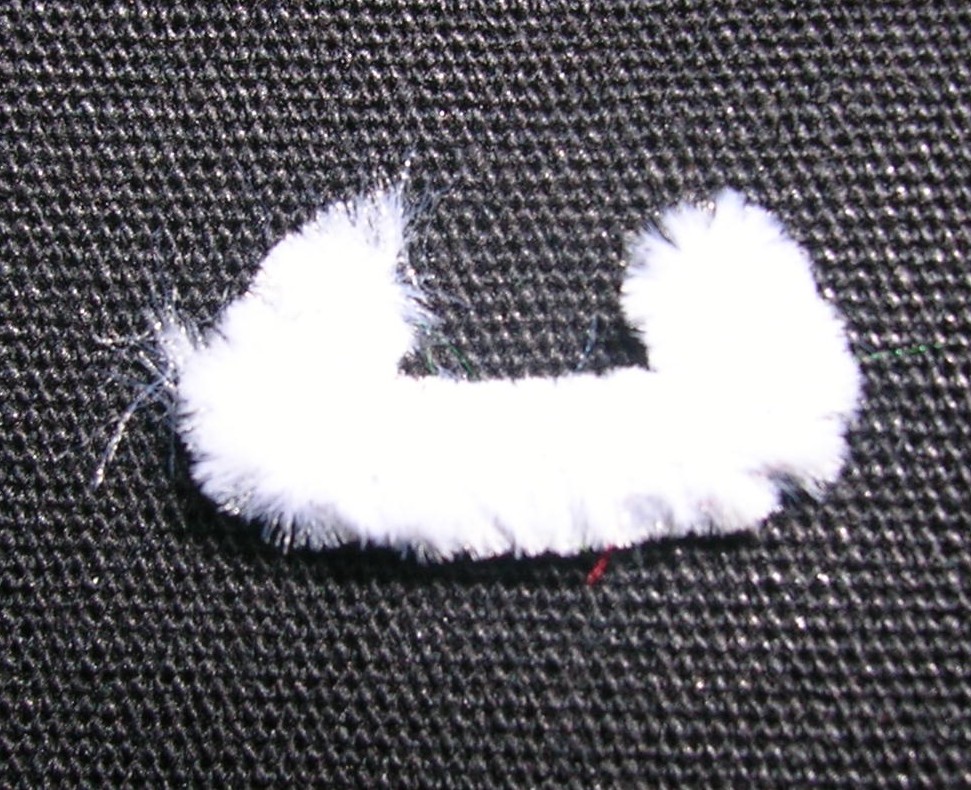
For those of you who were looking for a previous post that was removed, here are the instructions again for making the pipe cleaner
penguins (you can use pipe cleaners or chenille sticks, your choice):
PENGUIN
1. Use 1 orange, 1 black and 1 white chenille stick (CS)
2. Wind the black CS around a pen 5 times, leaving a short
straight piece at the end for the wings (if you'd like, you can wind the entire
CS and use a separate one for the wings)
3. Cut the straight piece off and bend it in half for wings.
4. Bend each side around your finger to make a loop and twist the
ends around the middle to attach.
5. Push these wings into the coil made
earlier about 1/4 of the way down (about 2 twirls)...all the way through to the
other side so that they stay in place.
6. Cut a white piece of CS and bend in
half.
7. Bend both ends over slightly so that they can hook onto the
twirls of the black coil made earlier (at the bottom and just below the first
or second twirl to leave space for a beak).
8. Put aside and make the feet with an orange CS. Bend
the end of the orange CS in 3 waves as shown,
squeeze them together as shown and you have your first foot
(curling the end around the base of the foot will hold it in place).
9. About 1 cm away from the foot,
bend the CS and form the second foot about 1cm from that as shown:
10. Twist the end around the second foot
so that it can be bent upward from the middle of the feet and put this end into
the bottom of the penguin so that the tip pokes out underneath the first twirl
of the black coil body (leaving space for eyes) as shown:
11. When the feet are in the correct place
at the bottom, bend the beak as shown and trim any excess.
12. Glue on eyes and you have a penguin!
Hope you have fun with these!
Till next time.
Cheers
Abby
}( *)8
Friday, November 21, 2014
Junior diving
Hi Everyone!
I was asked the other day how old you need to be to dive. Well, here's the long answer:
PADI - 8 years old+ - Skin diver
- 8 years+ -
There's a Bubblemaker course where you learn about and use
scuba diving equipment and you get
to take your first breath underwater.
- 8 years+ - Seal
Team is a course that can be taken to get an introduction to wreck,
navigation, buoyancy,
underwater photography, environmental awareness and more. Once you've learnt
more, you get to go
on Aqua Missions using your new skills.
- 10 - 14 yrs - Junior
Open Water: this certifies you as a diver but with age-related
restrictions.
- 12 - 14 yrs (all
these have age-related restrictions)
- Junior Advanced Open Water
- Junior Rescue Diver
- Junior Master Scuba Diver
For more info, check out www.padi.com
NAUI - 5 years+ - Snorkelling for Kids of All Ages -
no certification
- 8 years+ - Junior Skin Diver
- 10 years+ - Junior Scuba Diver
- 12 years+ - Junior Advanced Scuba
- 15 years+ - Master Scuba Diver
For more info, check out www.naui.org
Hope this helps.
Cheers
Abby
}( °)8
Subscribe to:
Posts (Atom)